
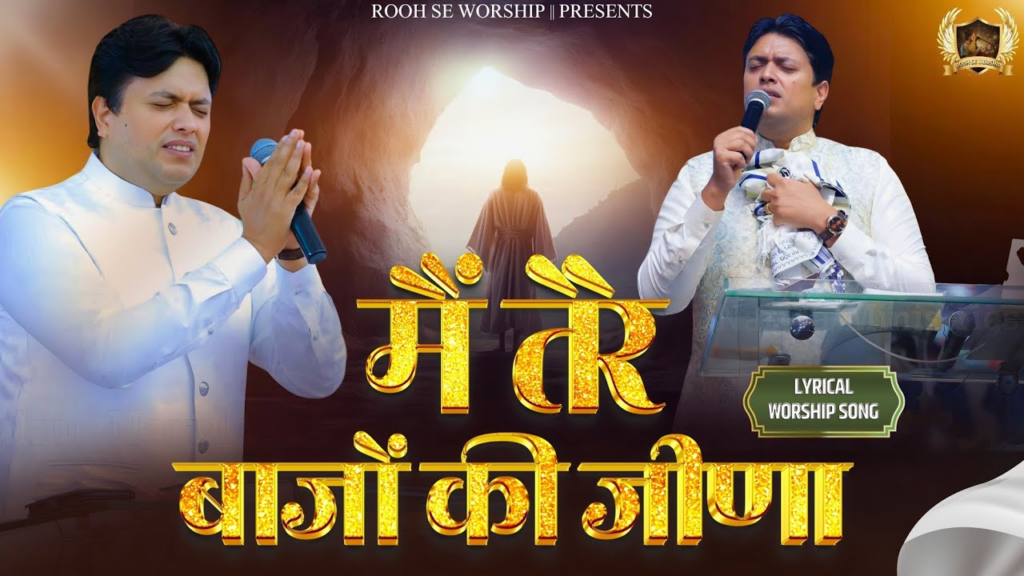
मैं तेरे बाजों की जीणा (Main Tere Baajon Ki Jeena) – Lyrics, Meaning & Translation
Below you will find the full lyrics, English translation, and the profound spiritual meaning behind this deeply emotional Punjabi Christian song of surrender and devotion.
Lyrics / गीत
मैं तेरे बाजों की जीणा, जीणा मैं की नासरी
होवा जे तेरे तो जुदा, साह होवेगा आखिरी – २
नहीं जीणा तेरे बाजों, नहीं जीणा तेरे बाजों – २
१. लक्ख हो जावें वैरी ज़माना, तेरा ही रहणा मैं – २
रज्ज – रज्ज भावें मैंनू सतावें, हस्स – हस्स सहणा मैं – २
देवा मीसाला मैं सदा, येसु तेरे प्यार दी
२. मेरे दिल दा, मेरी रूह दा, मालिक येसु तू – २
शाम सवेरे सिखर दुपहरी, दिसदा तू ही तू – २
तेरी हम्दा दे विच्च गुज़रे, इक्क – इक्क साह मेरा – २
हर दम होंठा उत्ते रेहंदा, मिट्ठा नां तेरा – २
English Translation
How can I live without You, how can I live, O Nazarene?
If I ever become separated from You, that breath will be my last – 2
I will not live without You, I will not live without You – 2
1. Even if the whole world becomes my enemy a hundred thousand times, I will remain Yours – 2
Even if they torment me to the absolute limit, I will endure it with a smile – 2
I will always give examples (testify) of Your love, Jesus.
2. Of my heart, of my soul, You are the Master, Jesus – 2
Evening, morning, and high noon, I only see You – 2
May every single breath of mine pass in Your praise (Hamd) – 2
Your sweet name always remains upon my lips – 2
Spiritual Meaning & Theme
This track is a profound, deeply emotional declaration of total dependence on Jesus Christ. It portrays a level of faith where life itself is meaningless without the Savior.
- Absolute Dependence: The phrase “Tere baajon ki jeena” translates to “Living without You is impossible.” The singer beautifully declares to the Nazarene (Jesus) that spiritual separation from Him would literally mean the end of their life (their final breath).
- Joy in Persecution: The first stanza touches on the very real theme of worldly trials and persecution. It boldly claims that even if the entire world turns into an enemy (Vairi zamana) and brings immense torment, the believer will endure it with a smile (Hass-hass sehna) because their identity belongs solely to Christ.
- Unceasing Worship: The final stanza reflects the command in 1 Thessalonians 5:17 to “pray continually.” From morning to the peak of noon (Sikhar dupehri) and into the evening, the believer’s focus remains entirely on Jesus, desiring that every breath is spent in His praise (Hamda).