
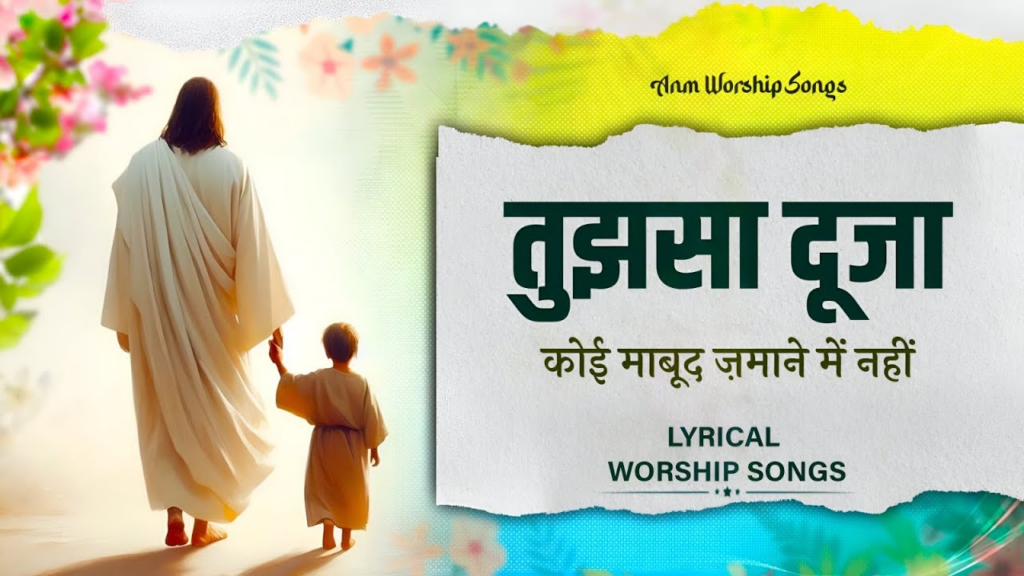
तुझसा दूजा कोई माबूद (Tujhsa Dooja Koi Maabood) – Lyrics, Meaning & Translation
Below you will find the full lyrics, English translation, and the profound biblical meaning behind this beautifully poetic Urdu-Hindi Christian song of exclusive worship and devotion.
Lyrics / गीत
तुझसा दूजा कोई माबूद ज़माने में नहीं – २
जो सिर झुके तेरे कदमों में – २, कभी झुके ना कहीं
तुझसा दूजा कोई माबूद…..
१. मेरी इबादतें सजदे, तेरे लिए हैं सभी – २
जो बंदगी में न हो तू, वो बंदगी ही नहीं
तुझसा दूजा कोई माबूद…..
२. है जब तलक मेरी सांसें, तेरा रहूंगा मसीह – २
ये ज़िन्दगी तेरी होगी, मेरा वायदा है यही
तुझसा दूजा कोई माबूद……
English Translation
There is no other God (Deity) like You in this world – 2
The head that bows at Your feet – 2, may it never bow anywhere else.
There is no other God…
1. All my worship and prostrations are for You alone – 2
The devotion in which You are not present, is not true devotion at all.
There is no other God…
2. As long as I have breath in me, I will remain Yours, O Christ – 2
This life will be entirely Yours, this is my solemn promise.
There is no other God…
Spiritual Meaning & Theme
This deep, reverent song is a beautiful declaration of absolute loyalty and exclusive worship to Jesus Christ, using profound Urdu poetry to convey total surrender.
- The Only True God: The opening line uses the word Maabood (meaning the ultimate object of worship/Deity). It is a direct reflection of Isaiah 45:5 (“I am the Lord, and there is no other; apart from me there is no God”). The worshiper acknowledges that Christ’s majesty is completely unmatched in this world (Zamane mein).
- Exclusive Bowing: The chorus powerfully echoes the command of Jesus in Matthew 4:10 (“Worship the Lord your God, and serve him only”). The believer vows that the head which has bowed in submission to Jesus will never bow to the idols, pressures, or false gods of this world.
- A Lifelong Promise: The final stanza transitions from physical acts of worship (Sajde) to a complete surrender of life itself. It mirrors Romans 14:8 (“If we live, we live for the Lord”), with the worshiper making a binding promise (Vaayda) to remain entirely Christ’s for as long as they have breath.